


Key Highlights
- RFM analysis is a powerful tool for understanding customer behavior and segmenting your audience based on their purchase patterns.
- By analyzing Recency, Frequency, and Monetary value, you can identify your most valuable customers and tailor your marketing efforts accordingly.
- Digital Rewards Cards (DRC) provide a rich source of data that can be leveraged for effective RFM analysis, leading to enhanced customer engagement and increased sales.
- Implementing RFM for your DRC program involves simple settings, automated segments, and automated push notifications, at no extra cost.
- Successful implementation of RFM analysis can result in a significant boost to customer loyalty, higher average order values, and an overall improvement in your business ROI.
Introduction
In today’s digital world, businesses always look for new ways to improve customer loyalty and grow sales. RFM analysis is a strong tool for companies in digital financial services. It helps them understand customer behavior and improve their marketing plans. When businesses use RFM analysis along with Digital Rewards Cards (DRC), they can create better experiences for customers. This can increase engagement and help build lasting customer loyalty.
Understanding RFM Analysis in the Context of Digital Rewards Cards
RFM analysis is a method used to group customers based on their buying history. It looks at three things: Recency, which is how recently a customer bought something; Frequency, which is how often they buy; and Monetary value, which is how much money they spend. By looking at these parts, businesses can get a complete view of their customers and find different groups within them.
When RFM analysis is used with Digital Rewards Cards (DRCs), it becomes even better. DRCs hold a lot of data about how customers buy. They allow businesses to follow spending patterns, how often customers visit, and how they engage with rewards programs. This information helps create focused marketing actions and personalized offers that fit each customer group.
The Basics of RFM Analysis: Recency, Frequency, and Monetary Value
RFM analysis is a way to group customers based on how they spend their money. It looks at their buying history to divide them into different categories. The method focuses on three important metrics: Recency, Frequency, and Monetary.
Recency shows how recently a customer bought something. If a customer has a high recency score, it means they are likely still engaged and may even be loyal. A low score may mean they are losing interest or are about to stop buying.
Frequency measures how often a customer makes purchases in a certain time. A high frequency score means they buy often and are loyal to the brand. A low score implies they don’t shop very often or only make a one-time purchase. Monetary value refers to the total money a customer spends over a set time. This helps see who the high-value customers are that help bring in more revenue.
Importance of RFM Analysis for Customer Segmentation
Customer segmentation is key for good marketing analytics, and RFM analysis is very important for effective segmentation. By organizing customers based on their RFM scores, businesses can shape their marketing to fit the specific needs and wants of each group. This focused style gives much better ROI than simple marketing campaigns, which often do not connect well with different customer groups.
For example, high-value, loyal customers can receive special rewards and personalized offers to keep them loyal for a long time. Meanwhile, customers who have not bought recently might need special campaigns or promotions to get them interested again and stop them from leaving. By knowing what makes each group different, businesses can use their marketing money better and improve the success of their campaigns.
Implementing RFM Analysis for DRC Programs
Implementing RFM analysis for your Digital Rewards Card (DRC) program is a smart step. It involves using data, setting RFM values, and creating segments. First, you need to get customer transaction data from your DRC system. Make sure this data is accurate and complete.
After collecting the data, you define your RFM values. This means giving scores to customers based on how recently they bought something, how often they shop, and how much money they spend. You will then use these scores to divide your customers into helpful segments.
Step-by-Step Guide to Performing RFM Analysis
Performing a full RFM analysis is important for getting clear insights and creating effective actions. This process begins with collecting and preparing data. Next, you will calculate RFM scores and group customers into segments. Finally, you can create focused marketing strategies based on these segments.
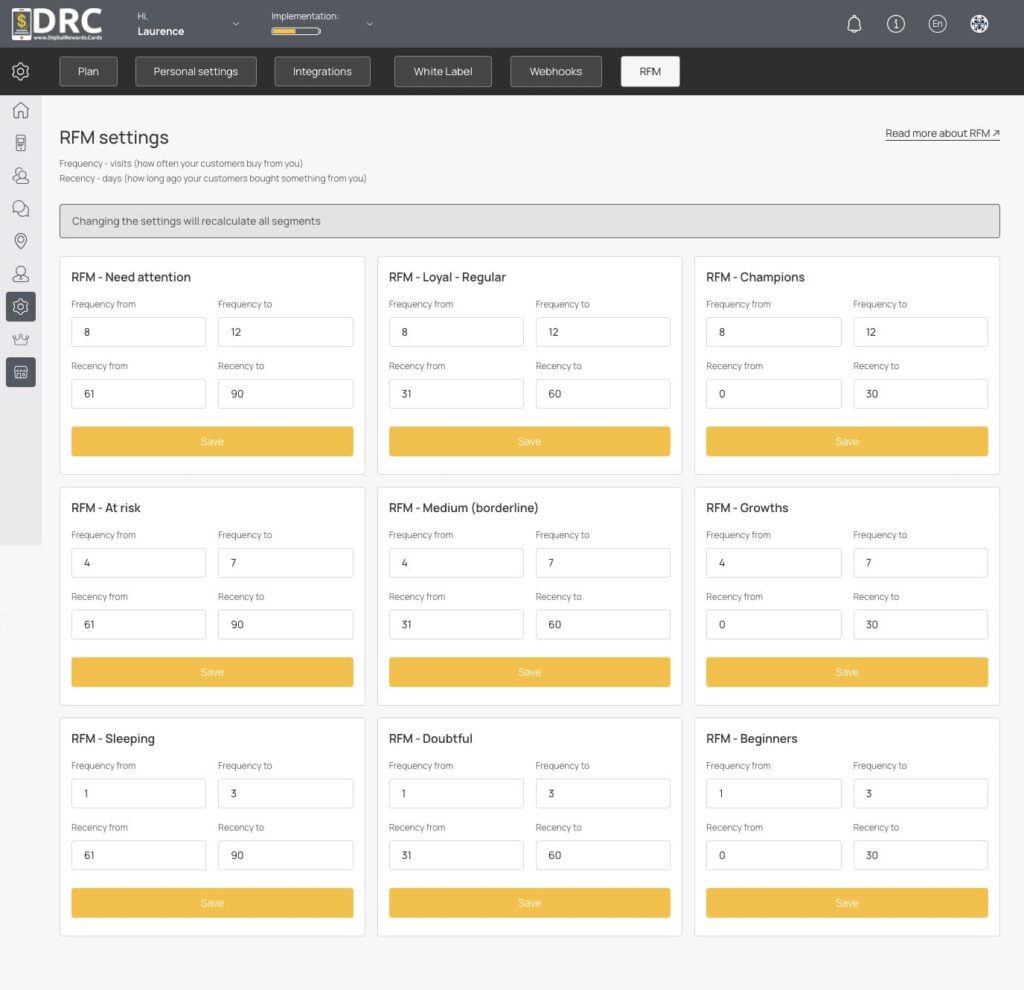
- Data Gathering and Preparation: Start by adding your criteria on the RFM Settings screen. Then allow some time to collect customer transaction data from your DRC system.
- RFM Score Calculation: After some time DRC calculates the RFM scores for each customer. This means placing customers into different scoring groups based on how recent, frequent, and valuable their purchases are.
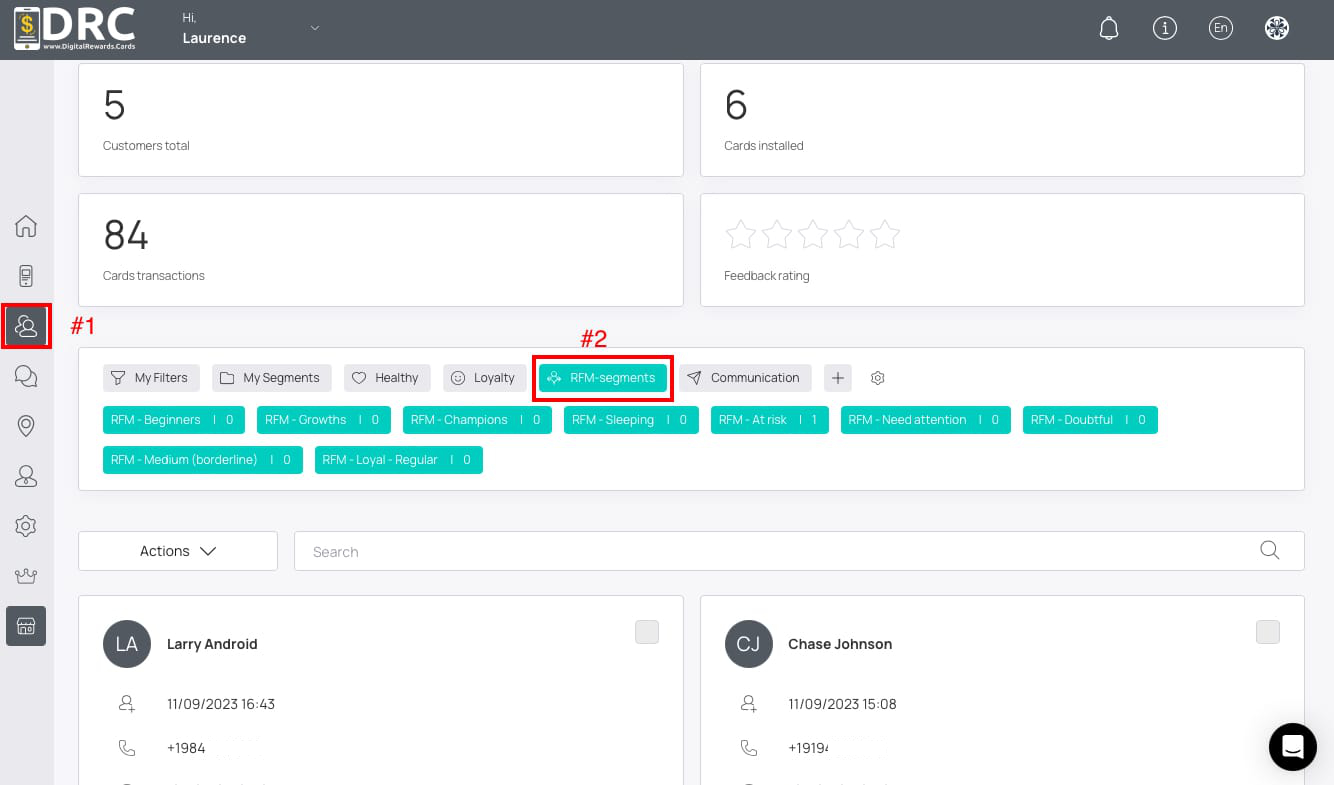
- Customer Segmentation using RFM Matrix: Lastly, you can view the different segments on the Customers screen. This means plotting customers on a chart using their RFM scores. This visual tool makes it easier to see different customer groups, such as “Best Customers,” “Loyal Customers,” and “At-Risk Customers.”
Tools and Technologies Required for Effective RFM Analysis
RFM analysis works best when you have the right tools and technology. You need these for data processing, segmenting customers, and visualizing results. Many analytics platforms and software are made for this type of analysis. These tools usually offer features like data integration, automatic RFM score calculations, and easy-to-use dashboards for seeing customer segments.
For businesses that want a full digital financial services platform, Digital Rewards Cards (DRC) offers a strong set of tools for programs and managing loyalty programs. It connects well with existing CRM systems and POS terminals. This makes it easy to gather customer transaction data, which is key for smooth RFM analysis. Their platform also allows for managing targeted campaigns and creating personalized offers. This way, businesses can use RFM insights to boost customer engagement.
Enhancing Customer Engagement with RFM Insights and Unlimited Push Notifications
RFM analysis goes beyond just dividing customers into groups. It helps improve how we connect with customers by creating strategies for the different groups we find. When we know which customers are the most valuable, we can focus our efforts and resources to nurture those important relationships.
Also, by understanding different customer types, like their spending habits and how often they buy, we can make loyalty programs that fit their needs. This personal touch makes our connections with customers stronger and leads to greater brand loyalty.
Tailoring Reward Programs Based on Customer Segments
One great way to use RFM analysis is to tailor loyalty program benefits for different customer groups. By matching rewards to what each customer likes and how they shop, businesses can make their loyalty programs more effective. This helps to build stronger customer loyalty.
For example, customers who buy often may enjoy special offers, early sales access, or extra points for shopping regularly. In contrast, high-value customers might like personalized deals on luxury items or invites to special events. Using push notifications and targeted email campaigns can share these custom rewards. This helps boost customer engagement and encourages shoppers to come back for more.
Personalizing Offers to Maximize Customer Retention
Personalization goes beyond loyalty programs. RFM analysis helps businesses create offers and promotions that connect with each customer group. This approach can improve customer retention and increase ROI. By looking at past purchase data, businesses can discover what each customer likes. They can then suggest products or offer exclusive discounts on items those customers are likely to buy.
Automate Push campaigns and email marketing campaigns can be very effective for sharing these personalized offers. By dividing email lists using RFM scores, businesses make sure customers get the right offers that match their needs and interests. Adding personal coupons and special discounts encourages customers to buy, leading to higher sales and better customer satisfaction.
Boosting Sales Through Targeted Marketing Campaigns
RFM analysis helps businesses move away from general marketing messages. It allows them to use a more focused strategy, which can increase sales. By knowing the unique traits of each customer group, businesses can create specific campaigns. These campaigns will match the needs and likes of each group.
This focused strategy makes sure that marketing messages are timely and relevant. This leads to a better chance of turning prospects into buyers, giving a higher ROI on marketing costs. Whether it’s about showing new products to valued customers or bringing back inactive ones with special deals, RFM insights help businesses sharpen their marketing for the best results.
Designing Campaigns That Resonate with High-Value Segments
A key sign of a successful business is its skill in finding and serving its most important customers. RFM analysis is very important here. It helps businesses focus their marketing on the best customers who bring in a lot of revenue and support company growth.
By looking at data like average order value and how often customers buy, businesses can spot their most valuable groups. These important customers usually show a lot of brand loyalty. They are also more likely to respond well to targeted marketing efforts, especially those that give exclusive benefits, personalized suggestions, or early access to new products and services.
Putting money into marketing analytics and RFM-driven campaigns for these key customer groups can help raise the lifetime value of customers. This approach also lowers customer loss and helps businesses make more profit, leading to steady growth.
Measuring the Impact of RFM-Based Campaigns on Sales
Implementing RFM-driven campaigns is only the first step; measuring their impact on key sales metrics is crucial for evaluating their effectiveness and making necessary adjustments to the overall marketing strategy. By tracking specific metrics, businesses can determine the ROI of their RFM-based campaigns and optimize them for continuous improvement.
Key metrics to track include:
|
Metric |
Description |
|
Conversion Rate |
Percentage of customers who make a purchase after engaging with a campaign |
|
Average Order Value (AOV) |
The average amount spent by customers on a single order |
|
Customer Retention Rate |
Percentage of customers who make repeat purchases within a specific period |
By consistently measuring these and other relevant metrics, businesses can gain valuable insights into the effectiveness of their RFM-based campaigns. This data-driven approach enables them to refine their targeting, messaging, and offer strategies to maximize sales, improve ROI, and ultimately achieve their business goals.
Case Studies: Success Stories of RFM in Digital Rewards
The power of RFM analysis in helping businesses grow is clear from many success stories in different industries. Here are two great examples that show how businesses used RFM analysis to improve their digital rewards programs and get amazing results.
Whether it is increasing loyalty program participation in retail or raising the average order value for online stores, RFM analysis has become a vital tool for businesses that want to get the most out of their digital rewards investments.
Retail Industry: Enhancing Loyalty Program Participation
A popular retail chain wanted more people to join its loyalty program. They used RFM analysis to learn more about their customers and improve their rewards system. By looking at purchase data, they found a big group of customers who were “at-risk” because they didn’t shop often or recently.
To win back these customers, the retailer started a special campaign. They offered bonus reward points to those who bought something within a certain time. They also sent personalized emails, showing products and deals that matched each customer’s interests.
The campaign worked very well. There was a big boost in loyalty program sign-ups, especially from the “at-risk” customers who had been inactive. The personalized messages appealed to them, leading to a higher customer lifetime value and better loyalty overall.
E-commerce Platforms: Increasing Average Order Value
An online shopping platform with a digital wallet wanted to boost its average order value (AOV). They used RFM analysis to divide their customers into groups. They discovered one group bought often but spent less per order. This showed a chance to encourage those customers to spend more.
To do this, the platform set up a tiered rewards system in their wallet. Customers who spent more could earn higher cashback and special discounts. They also added personalized product suggestions at checkout. These recommendations showed related items or more expensive options based on what was already in the cart.
By encouraging more spending through their rewards system and using personalized suggestions, the platform was able to increase AOV for the customer group. This not only raised their revenue but also made customers happier by providing more value and a better shopping experience.
Challenges and Solutions in RFM Analysis for DRC
While RFM analysis has many benefits, using it well for your DRC program comes with some challenges. You need to make sure your data is accurate and complete. It’s also important to combine data from different sources and avoid getting stuck in too much analysis. These are key issues that must be resolved for RFM to work successfully.
However, if you have the right strategies and tools, you can overcome these challenges. This will help you unleash the full power of RFM analysis for your DRC program.
Data Quality and Integration Issues
Data quality and integration are major challenges for successful RFM analysis. If the data is wrong or missing, it can give incorrect RFM scores and lead to wrong customer groupings. This makes the analysis not useful. To have good data quality, businesses need to regularly clean and check their data to find and fix any problems or gaps.
Bringing together data from different sources, like CRM systems, POS terminals, and marketing platforms, is very important. This helps to get a complete view of the customer. If data is stuck in silos, it can be hard to really understand customer behavior, leading to broken segments. Setting up smooth data integration, like using a centralized data warehouse, helps to keep your customer data clear and complete.
It’s also very important to keep customer information private and secure. Businesses have to follow data protection laws and set up the right security measures. This protects sensitive customer data from getting into the wrong hands or being breached.
Overcoming Analysis Paralysis with Actionable Insights
Analyzing data is important, but it’s easy to fall into “analysis paralysis.” This means overthinking and analyzing without turning it into real action. RFM analysis needs to create useful insights that help make smart decisions and boost marketing efforts.
You should focus on finding key customer groups that can grow or be kept. Don’t get stuck trying to reach every tiny segment. Instead, look for insights that can lead to focused campaigns, personalized deals, or ways to improve your DRC program.
It’s vital to regularly check and update your RFM model and the way you look at segments. Customer behavior changes, so your analysis must change too. Keep trying new metrics, data points, and ways to group customers. This helps you understand them better and improve your DRC offering.
Future Trends in RFM Analysis and Digital Rewards Programs
As technology grows faster than ever, RFM analysis and digital reward programs will also change. The future brings exciting improvements in AI and Big Data. These will make RFM models even better, helping businesses understand customers more deeply.
At the same time, new trends in customer loyalty and reward strategies will require businesses to adjust and innovate. It’s important for businesses to keep improving their DRC programs. This will help them stay competitive and build strong relationships with their customers.
Emerging Trends in Customer Loyalty and Reward Strategies
The world of customer loyalty and rewards is changing all the time. This change is driven by new customer needs and advances in technology. Regular point-based loyalty programs can’t satisfy today’s picky customers anymore.
New trends like gamification, experience rewards, and personal incentives are becoming popular. Businesses must rethink their loyalty programs to include things that offer instant rewards, personal value, and a feeling of community. Adding social media and mobile technology to reward programs is also more important now. It helps businesses connect with customers in real-time.
By keeping up with these new trends and adjusting their reward strategies, businesses can create better DRC programs. This will help them build real customer loyalty and encourage long-term success.
Conclusion
In conclusion, RFM analysis is a strong method that can improve how businesses engage with customers and increase sales in digital rewards card programs. By looking at how recent, frequent, and valuable customer transactions are, businesses can customize rewards, personalize offers, and create targeted marketing better. Using new RFM metrics, predictive analytics, and machine learning can help improve how businesses group customers and boost loyalty. Even with problems like data quality, RFM analysis can still help businesses make good decisions. As AI and big data change RFM models, keeping up with new trends in customer loyalty will be essential for success in the changing digital rewards world.
Frequently Asked Questions
What is the first step in implementing RFM analysis for a DRC program?
RFM Analysis, segmentation, and campaigns are built-in to DRC. Simply signup for a trial account, create your promo card, and start using it. Data is automatically stored for your customers including purchase history, how often they buy, and how much they spend. This information will be used to create your RFM segmentation.
How can RFM analysis improve customer engagement for digital rewards cards?
RFM analysis helps you shape your loyalty program and special offers for different groups of customers. When you know how they shop, you can design focused campaigns and personalized rewards. You can setup automated Push campaigns based on segmentation. This will connect better with each group and make them more engaged.
Can RFM analysis predict future customer behavior in DRC programs?
RFM analysis, when paired with predictive analytics, can offer helpful insights into how customers might behave in the future. Looking at past patterns and trends lets businesses predict future buying habits, engagement, and the chance that customers might leave.
What are the common pitfalls in RFM analysis and how to avoid them?
Common mistakes are using incomplete or wrong data and becoming bogged down in too much analysis. To avoid these mistakes, make sure the data is accurate. Focus on useful insights and keep improving your RFM model as customer behavior changes.